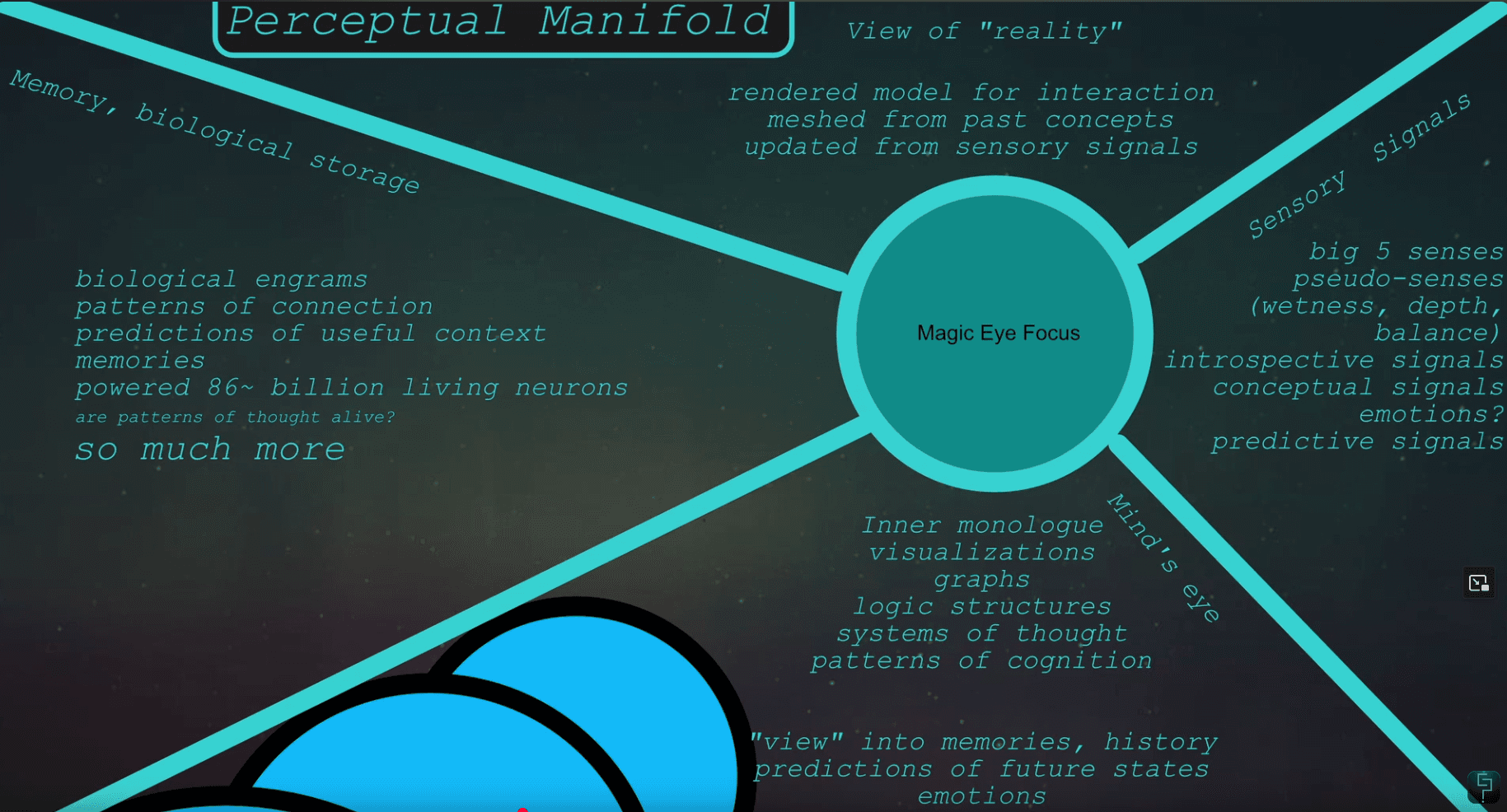
Our understanding of the world is formed through layers of interpretation. Depth, motion, balance, temperature, even our sense of time—all emerge from the brain combining raw sensory signals into coherent concepts. This project begins with that premise and asks a bold question: what if we could add new forms of sensory data to this system? By harnessing small thermal cameras, time‑of‑flight depth sensors, and haptic feedback arrays, this wearable device creates an augmented perceptual “manifold,” giving the brain additional channels of information to interpret.
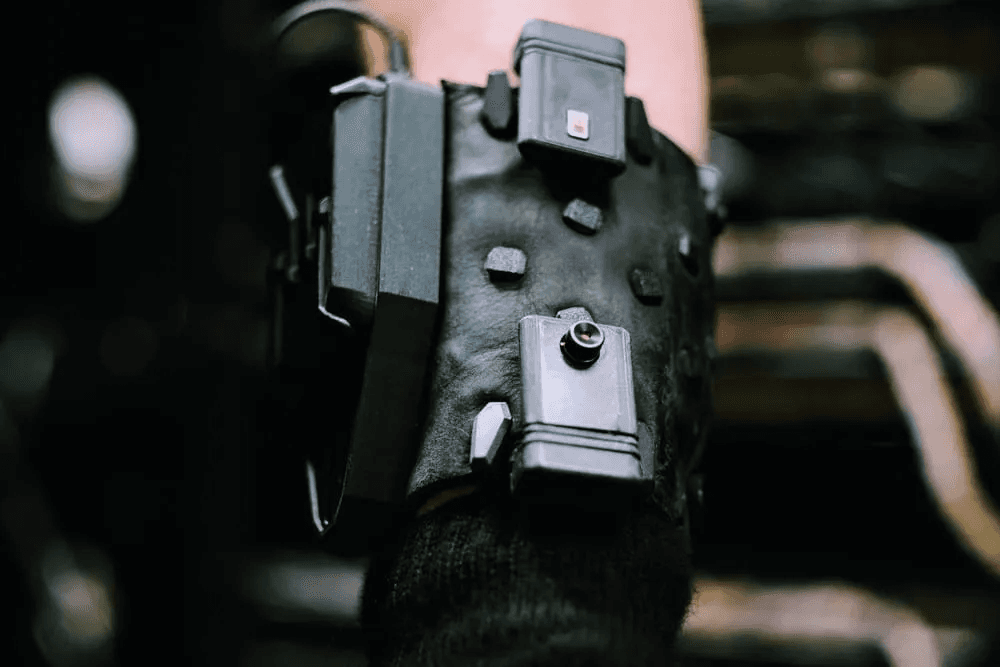
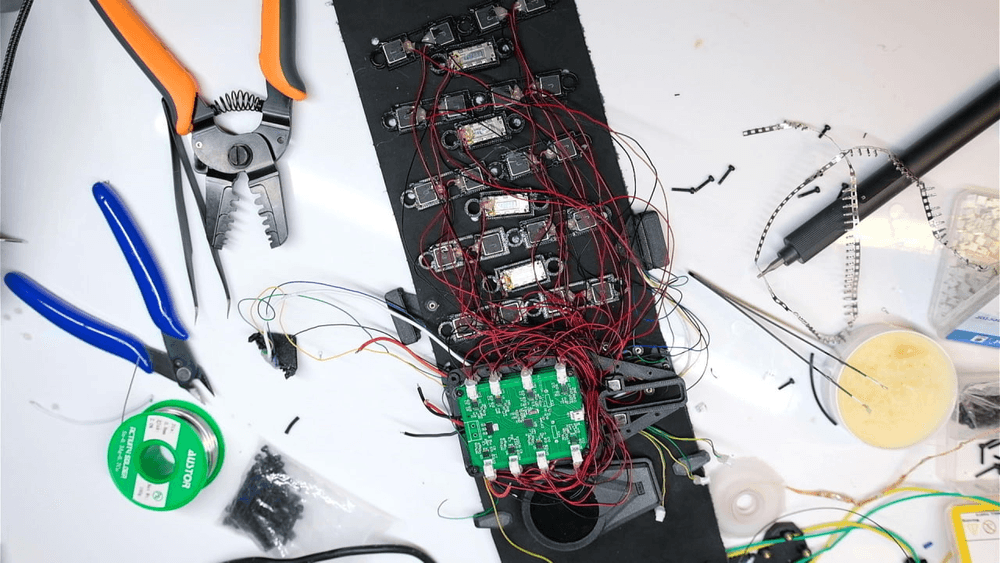
The platform uses custom-designed LRA driver PCBs and modular sensor slots, but the core functionality is achievable with off‑the‑shelf components costing under $50. Sensors such as the MLX90640 and VL53L5CX are mounted on the wrists and paired with dense haptic bands that encode incoming data into tactile patterns. Over days or weeks of continuous wear, users begin forming subconscious associations between these patterns and their environmental meaning—an early form of sensory substitution and eventual sensory addition.
Beyond environmental awareness, the system supports wireless sensor inputs, enabling unconventional data streams such as vehicle OBD-II metrics or spatial cues from behind the user. The project ultimately serves as a general-purpose augmentation platform for exploring how new symbols, stimuli, and sensory mappings can reshape perception. It reflects the idea that “the map is not the territory,” inviting users to experiment with building new internal maps—and expanding the shadows on the cave walls of the mind.
Our understanding of the world is formed through layers of interpretation. Depth, motion, balance, temperature, even our sense of time—all emerge from the brain combining raw sensory signals into coherent concepts. This project begins with that premise and asks a bold question: what if we could add new forms of sensory data to this system? By harnessing small thermal cameras, time‑of‑flight depth sensors, and haptic feedback arrays, this wearable device creates an augmented perceptual “manifold,” giving the brain additional channels of information to interpret.
The platform uses custom-designed LRA driver PCBs and modular sensor slots, but the core functionality is achievable with off‑the‑shelf components costing under $50. Sensors such as the MLX90640 and VL53L5CX are mounted on the wrists and paired with dense haptic bands that encode incoming data into tactile patterns. Over days or weeks of continuous wear, users begin forming subconscious associations between these patterns and their environmental meaning—an early form of sensory substitution and eventual sensory addition.
Beyond environmental awareness, the system supports wireless sensor inputs, enabling unconventional data streams such as vehicle OBD-II metrics or spatial cues from behind the user. The project ultimately serves as a general-purpose augmentation platform for exploring how new symbols, stimuli, and sensory mappings can reshape perception. It reflects the idea that “the map is not the territory,” inviting users to experiment with building new internal maps—and expanding the shadows on the cave walls of the mind.
Our understanding of the world is formed through layers of interpretation. Depth, motion, balance, temperature, even our sense of time—all emerge from the brain combining raw sensory signals into coherent concepts. This project begins with that premise and asks a bold question: what if we could add new forms of sensory data to this system? By harnessing small thermal cameras, time‑of‑flight depth sensors, and haptic feedback arrays, this wearable device creates an augmented perceptual “manifold,” giving the brain additional channels of information to interpret.
The platform uses custom-designed LRA driver PCBs and modular sensor slots, but the core functionality is achievable with off‑the‑shelf components costing under $50. Sensors such as the MLX90640 and VL53L5CX are mounted on the wrists and paired with dense haptic bands that encode incoming data into tactile patterns. Over days or weeks of continuous wear, users begin forming subconscious associations between these patterns and their environmental meaning—an early form of sensory substitution and eventual sensory addition.
Beyond environmental awareness, the system supports wireless sensor inputs, enabling unconventional data streams such as vehicle OBD-II metrics or spatial cues from behind the user. The project ultimately serves as a general-purpose augmentation platform for exploring how new symbols, stimuli, and sensory mappings can reshape perception. It reflects the idea that “the map is not the territory,” inviting users to experiment with building new internal maps—and expanding the shadows on the cave walls of the mind.